 Elizabeth Davidson · · 5 min read
Old Town Lake Oswego: Where Oswego Began
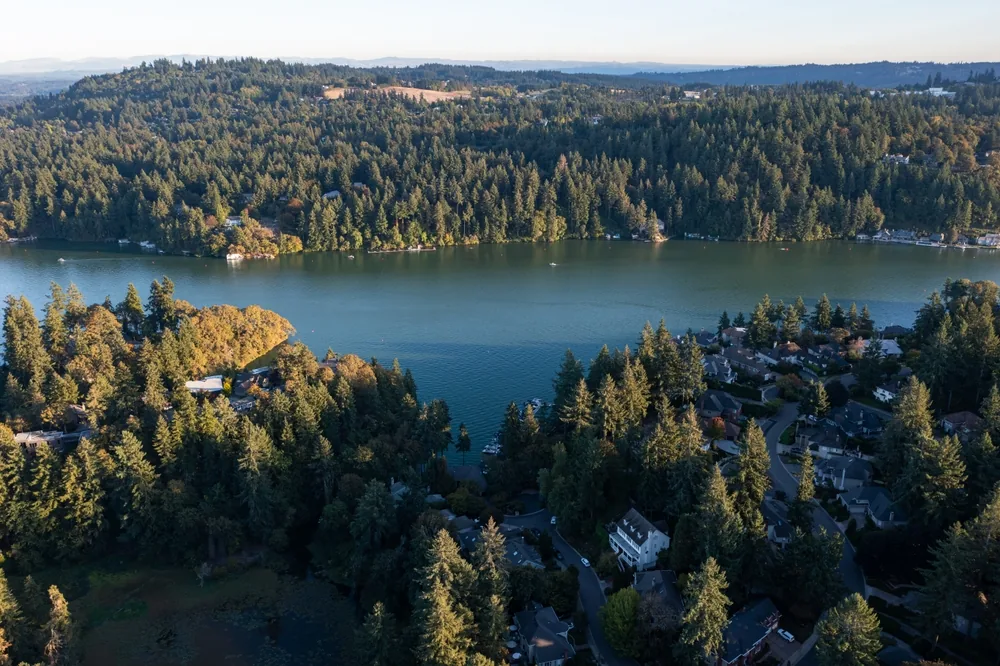
Every town has a starting point, and in Lake Oswego it's a small pocket of streets tucked between State Street and the Willamette River. Old Town is where Oswego began: platted in 1851 by Albert Durham, replatted for the iron industry, and still home to an iron-era worker's cottage and an 1890 lodge hall. I love walking these blocks, so let me show you around.
Quick facts
- What it is: Lake Oswego's original town site and its oldest neighborhood
- Where: between State Street, the Willamette River, Oswego Creek and Leonard Street, an area of under 40 acres
- Platted: 1851, by founder Albert Durham
- Park: George Rogers Park, 611 S. State Street, the city's first community park
- Schools (LOSD locator): Hallinan Elementary, Lakeridge Middle School and Lakeridge High School
How Oswego got started
The city's 1998 Old Town Neighborhood Plan calls Old Town the location of the original town of Oswego and the oldest portion of the city. Albert Durham platted it in 1851 and founded the community.
Then came iron. The 2009 National Register form for the Iron Workers' Cottage says John Trullinger bought Durham's town site in 1866 and replatted it on January 10, 1867, for workers of the new iron industry, with the plat sitting north of the Oregon Iron Company furnace. You can still read that history on the street signs: the neighborhood plan notes that Old Town's streets carry names tied to the early iron industry, such as Ladd, Leonard and Wilbur.
The buildings that are still here
When the city adopted its neighborhood plan in 1998, it noted that the area had one of the city's highest concentrations of pre-1900 buildings. That same National Register form says two iron worker housing units remain, one of them the cottage itself. A few to look for:
The Iron Workers' Cottage, 40 Wilbur Street. This circa-1882 house is most likely one of the 100 homes the Oregon Iron & Steel Company built for employees between 1882 and 1884, according to its National Register form. The Lake Oswego Preservation Society calls it the last remaining intact residence from Lake Oswego's iron era. Today the Lake Oswego Preservation Society runs it as a museum, open Saturdays from 11 a.m. to 3 p.m. (unless the day falls on a holiday) and by appointment for groups. Admission is free, and there are three parking places, including one ADA space, off the alley behind the museum.
The Odd Fellows Hall, Durham and Church streets. Built in 1890 as the meeting place of Oswego Lodge No. 93 of the Independent Order of Odd Fellows, it's a two-story, 31-by-60-foot wood-frame hall with a stepped "boomtown" false front. Its National Register nomination calls it one of the oldest buildings in Lake Oswego and one of the last buildings of "Old Town."
The George Rogers House, 59 Wilbur Street. A 1929 Mission/Spanish Revival home designed by Van Evera Bailey, listed on the National Register in 1996.
George Rogers Park and the iron furnace
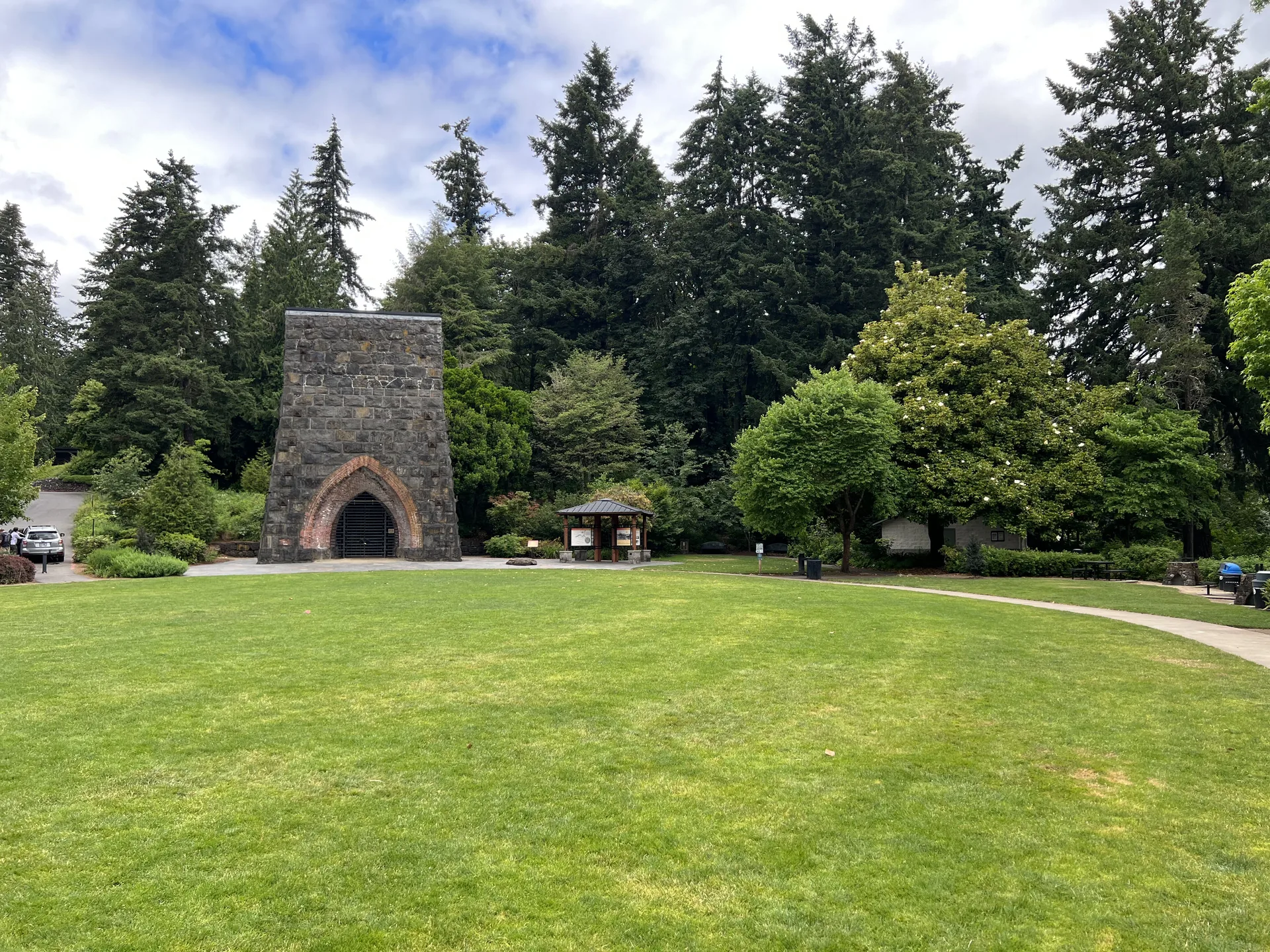
At the southern end of Old Town, George Rogers Park covers 26 acres along the Willamette River at 611 S. State Street. The city calls it Lake Oswego's first community park and the center of the city's industrial iron history. Its centerpiece is the stone iron furnace from 1866; the city's Iron Heritage Trail page says it was the first iron furnace on the Pacific Coast and is the only surviving historic furnace west of the Rocky Mountains. I wrote more about it in my post on the Oregon Iron Company furnace.
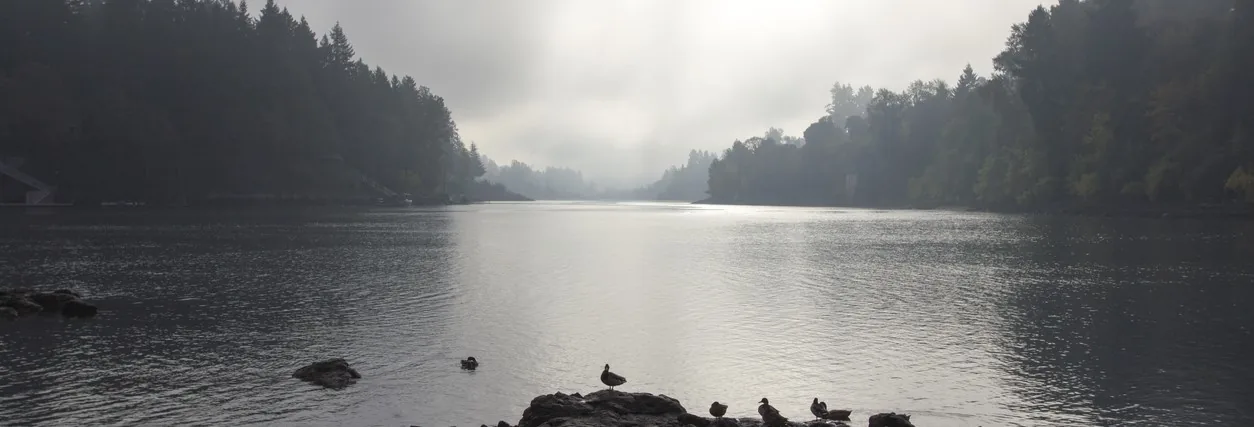
The city also says one of the best views of the Willamette River is near the furnace in the lower park, and I agree.
A new riverfront connection
Here's the exciting news this month. The city has been building the missing section of the Willamette River Greenway Trail between George Rogers Park and Roehr Park. In its November 18, 2026 update, the city said the project is nearing completion and paving along the pathway is done, with concrete, landscaping and a driveway still to finish. Once it opens, Lake Oswego will have a continuous 2.25-mile multi-use path along the river connecting Foothills, Roehr and George Rogers parks. Until then, please follow the posted closure signs; the city says ribbon-cutting details are coming.
Homes in Old Town
The 1998 neighborhood plan described three "Old Town Styles" to guide new building: Vernacular (the worker cottage), Craftsman bungalow and Cape Cod. In 2009, the National Register form for the cottage described Old Town as a mix of single-family homes, multi-family condominiums, parks and State Street businesses. City GIS puts the median single-family lot at 5,400 square feet.
Two named areas are worth knowing:
- The original Oswego plat. The National Register form says the Old Town neighborhood embodies the original 1867 plat of the Village of Oswego. Ladd, Furnace, Wilbur and Church streets run through it.
- Riverbend on the Willamette Condominium. A condominium plat filed in 1999 with its units on Furnace Street along the Willamette River, next to Roehr Park.
Getting around
TriMet's Line 35 (Macadam/Greeley) stops at the edge of the original plat, and downtown Lake Oswego is about 0.8 miles by road from the center of the neighborhood.
You can find more of my posts on my Lake Oswego city guide page.
Lake Oswego business of the week
After a stroll through Old Town, a pub dinner downtown hits the spot. A favorite is The Dullahan Irish Pub, serving familiar Irish fare and drinks in a lively setting with a spacious patio. You'll find it at 352 B Ave, Lake Oswego, OR 97034.
Frequently asked questions
Where is Old Town in Lake Oswego? According to the Old Town Neighborhood Plan, it lies between State Street, the Willamette River, Oswego Creek and Leonard Street, an area of under 40 acres, with George Rogers Park in its southern portion.
Who founded Oswego? Albert Durham, who platted the town in 1851, according to the city's Old Town Neighborhood Plan. John Trullinger bought the town site in 1866 and replatted it in 1867 for workers of the iron industry.
Can I visit the Iron Workers' Cottage? Yes. The Lake Oswego Preservation Society operates it as a free museum, open Saturdays from 11 a.m. to 3 p.m. (unless the day is a holiday) and by appointment for groups.
Which schools serve Old Town? The Lake Oswego School District locator returned Hallinan Elementary, Lakeridge Middle School and Lakeridge High School for the addresses checked in Old Town; the city's GIS shows Hallinan covering about 97% of the neighborhood, so it's worth checking a specific address.
Old Town is one of my favorite places to show people the roots of this city. If you're curious about living in Lake Oswego, I'd love to hear from you.
Sources
- City of Lake Oswego: Old Town Neighborhood Plan (1998, PDF)
- City of Lake Oswego: Old Town Neighborhood Association
- National Park Service: Iron Workers' Cottage National Register form (PDF)
- National Park Service: Lake Oswego Odd Fellows Hall
- National Park Service: George Rogers House
- Lake Oswego Preservation Society: The Iron Workers Museum
- City of Lake Oswego: George Rogers Park
- City of Lake Oswego: Oswego Iron Heritage Trail
- City of Lake Oswego: Willamette River Greenway Trail, George Rogers Park to Roehr Park
- Lake Oswego School District school locator
- City of Lake Oswego maps (GIS)
- TriMet Line 35
- The Dullahan Irish Pub
- The Move Genie: Living in Lake Oswego
Thinking about buying or selling in Portland or Lake Oswego? Let's talk.
Contact Elizabeth